When to Promote vs. When to Hire From Outside
You look at your lead technician. They show up early every morning. They execute the work flawlessly. They know your most demanding clients by their first names. A management position just opened up in your company, and they expect you to hand them the job. You want to reward their loyalty. You feel an intense pressure to give them the title. But a quiet, persistent doubt lingers in your mind. You wonder if they can actually lead people. This moment represents a critical junction in your business. Promoting the wrong person out of guilt destroys your culture and stifles your growth. You must evaluate this choice with clinical precision.
Working Capital: The Number That Separates Growing Businesses from Stalled Ones
You just landed the biggest contract in your company's history. You hang up the phone and stare at your desk. You should feel a massive surge of adrenaline. You should jump out of your chair and celebrate the victory with your team. Instead, a cold knot forms in your stomach. You look at your bank balance and realize the terrifying operational truth. To execute this massive project, you must order thousands of dollars in materials tomorrow morning. You must pay your technicians for the next four weeks of intense labor. You must cover the extra fuel, the insurance premiums, and the staging costs. You must pay all these expenses long before the client ever cuts you a single check. You just became a victim of your own success.
Why Owner-Dependent Businesses Sell for Less and What to Do About It
You answer every emergency call. You sign every check. You close the biggest deals. You take pride in this relentless hustle. You believe your personal grit built this company from nothing, and you are entirely correct. But that exact same grit now actively destroys your future wealth. When you become the undisputed center of your business, you create a fatal operational flaw. You make the company completely unsellable. A buyer will not pay a premium for a high-stress job. They pay a premium for a wealth-generating machine. If your machine requires your constant physical presence to operate, the market will penalize you with a massive owner-dependency discount.
Why Delegation Feels Like Loss of Control and How to Get Over It
You look at the email draft your newly promoted manager prepared and your chest immediately tightens. You see three minor formatting errors and a sentence that does not sound exactly like your personal voice. You delete the entire message and rewrite it yourself. You click send. You tell yourself that excellence requires a personal touch. You believe that nobody else cares as much as you do about the client experience. This belief creates a comfortable prison. You assume that doing the work guarantees the quality of the work. This specific mindset represents the ultimate delegation challenge small business owner control issue. You confuse micromanagement with high standards. You mistake your own physical exhaustion for dedicated leadership.
Why Organic Growth Is a Strategy, Not a Default
You describe your success to peers with a subtle sense of pride. You tell them you grew your business entirely through word of mouth. You never spend a dime on advertising. The phone simply rings because you deliver excellent service. You believe this accidental momentum validates your expertise. It feels good to be wanted by the market without having to ask. But treating organic growth as a default setting represents a massive tactical error. You surrender total control of your revenue to chance. You cannot predict your cash flow. You cannot plan your hiring schedule. You operate entirely at the mercy of the market. Organic growth must stop acting as a happy accident. You must turn it into a deliberate, engineered strategy.
What SOPs Are and Why Every Business Over Five People Needs Them
When your business employed three people, you managed the operation through sheer proximity. You watched every task. You heard every client phone call. You corrected mistakes the moment they happened. You acted as the human operating system for the entire company. Now you employ more than five people, and the cracks in that foundation appear everywhere. You find yourself repeating the identical instructions five times a week. Your technicians deliver widely inconsistent results to your clients. The rework eats your margins. You feel the business slipping through your fingers, and your only solution involves working more hours to watch everyone closer. This reaction traps you in a cage of your own making.
The Performance Review That Actually Changes Behavior
You sit across the desk from your employee. You hold a generic form you printed from the internet fifteen minutes ago. You nervously clear your throat and attempt to deliver a feedback sandwich. You offer a vague compliment, quickly mumble something about needing to improve communication, and then rush into another compliment to soften the blow. You end the meeting by granting a standard cost-of-living raise. The employee leaves the room completely confused about their actual standing in the company. Two weeks later, the exact same operational mistakes keep happening. You feel frustrated and assume you just hired unmotivated people. This assumption represents a massive failure in leadership.
How to Read a P&L Like a CEO, Not an Accountant
You receive an email from your bookkeeper. An attachment sits there, labeled with the month and the year. You open the document. Your eyes skip past the top line. They skip past the detailed expenses. You look directly at the bottom right corner. If the number shines in black, you breathe a heavy sigh of relief. If the number glares in red, your chest tightens with immediate anxiety. You close the document and go back to work. You treat your financial statement like a report card. You view it as a final grade on your performance for the previous thirty days.
The Buyer's Perspective: What Acquirers Actually Look For
You look at your business and see decades of memories. You see the late nights, the missed family dinners, and the technical hurdles you fought to overcome. You see the sheer grit it took to build your revenue from nothing. You believe this emotional equity adds value. A buyer does not. A potential acquirer looks at your business and sees a product. They see a series of future cash flows. They see risk. If you want to command a premium price for your life's work, you must change your perspective. You must view your operation through the cold, calculating lens of an investor.
The Accountability System That Works in a Business of Any Size
Nagging is not leadership. It is a choice to stay small. You likely spend your afternoons repeating instructions you already gave three times this morning. You catch an employee making a mistake and you point it out with a heavy sigh. They apologize and they promise to do better. You feel like you are coaching them. You feel like a "hands-on" owner. But two weeks later the identical mistake happens again. This cycle is exhausting. It is the reason you feel like you are working harder but not growing faster. You are trapped in the "nagging cycle" because you have not built a system for accountability. You are trying to use your personality to keep the business together but personalities do not scale.
The Capital Allocation Decision: Where to Put the Next Dollar You Earn
You finally reached the end of a profitable month. After you pay the technicians and the landlord and the tax collector, you see a surplus in your bank account. Most service-based business owners view this extra money as a reward. You feel a sudden urge to buy that new specialized truck. You want to upgrade the office furniture. You think about taking a larger draw to pay for a personal vacation. You believe you earned it.
But this impulsive approach represents a tactical error. This habit keeps your business stuck in a cycle of stagnant growth. Every dollar of profit is not a prize. It is a strategic asset. How you choose to deploy that next dollar determines your future. You will either remain a prisoner of your operations or become the architect of a ten-million-dollar enterprise.
Capital allocation serves as the most important skill an owner develops. You must move from a player-coach to a true leader. In the early days, you allocated your time to survive. As you scale, you must allocate your capital to thrive. If you lack a specific framework for this, the market will take that money back. It will disappear through inefficiency and missed opportunities. You must stop being a consumer of your profit. You must start being a clinical manager of your reinvestment. This requires a fundamental owner identity shift from technician to leader.
The Expense Approval System That Removes the Owner From Every Purchase
You act as the most expensive administrative assistant in your company. Every time a technician needs a new drill bit or the office manager wants to buy a ream of paper, they have to find you, explain the need, and wait for your verbal approval. You believe this keeps you in control of your cash flow. You tell yourself that you are protecting the margins and preventing waste. In reality, you are strangling your growth. You have turned yourself into the ultimate bottleneck. If you have to approve every twenty-dollar purchase, you are telegraphing that you do not trust your team or your own systems. This lack of trust represents a conscious choice to stay small.
How to Build a Pay Scale for a Business Without an HR Department
You probably handle raises like a high-stakes hostage negotiation. An employee walks into your office, shuts the door with a heavy hand, and tells you they received an offer for two dollars more an hour from the competitor across town. You feel the familiar surge of panic. You quickly scan your mental bank balance, calculate the cost of losing their expertise, and offer a counter on the spot. You feel like a savvy negotiator for keeping them on the team, but you just poisoned your culture and your margins. By reacting to a threat rather than following a system, you created a pay inequity that will eventually leak into the rest of the staff. You do not need a massive human resources department to fix this volatility. You need a disciplined pay scale that protects your profit and empowers your people.
The Pricing Mistake That Is Quietly Killing Your Margins
You slide the proposal across the desk. The prospect stares at the number. They frown. They ask for a slight reduction to get the deal signed today. You feel the pressure of an empty schedule next week. You cave. You strike ten percent off the total and shake their hand. You walk to your truck feeling like a master negotiator. You secured the revenue. You kept your technicians busy. But this emotional victory hides a brutal financial reality. You did not win a negotiation. You just bought a job. This specific mistake quietly kills your margins and suffocates your business.
How to Calculate What Your Business Is Worth Today
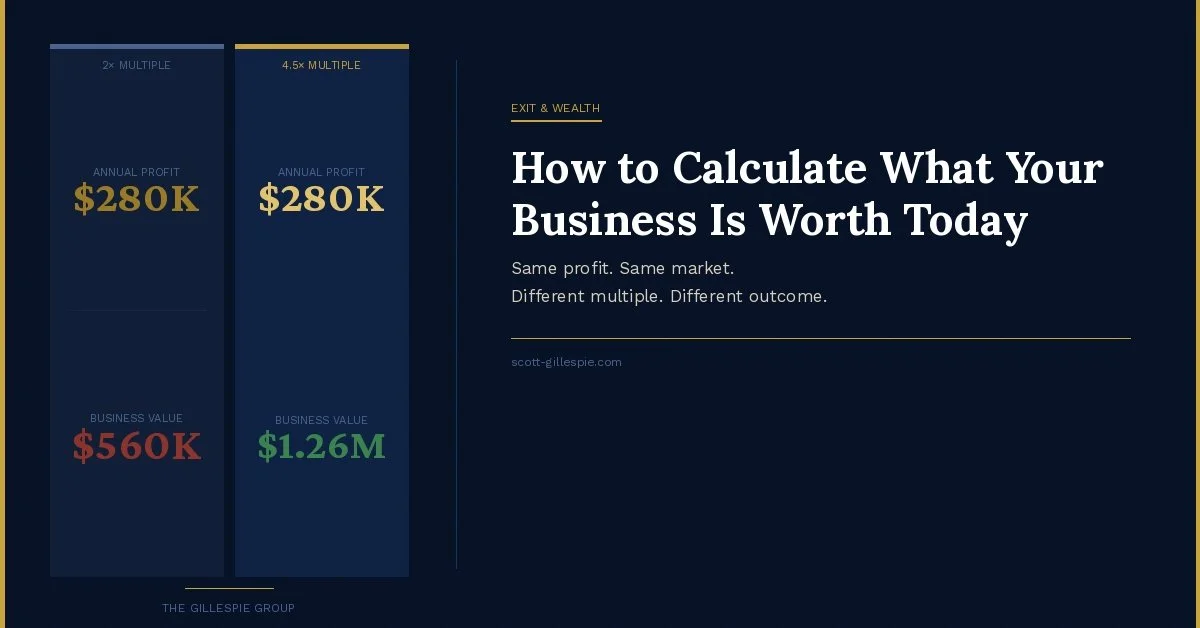
You currently treat your business like a black box. You know how much is in the checking account, you know what your revenue was last month, and you have a vague "gut feeling" that the whole thing is worth a few million dollars. You tell yourself that you’ll figure out the actual value when you’re ready to retire in ten years. This lack of clarity is a strategic mistake that limits your current decision-making. If you don't know your business's value, you cannot effectively allocate capital, you cannot negotiate with investors, and you certainly cannot perform a proper exit readiness assessment. To calculate business value small business owner today, you must move past emotional sweat equity and embrace the cold math of the market.
How to Build a Culture Without Writing a Values Poster
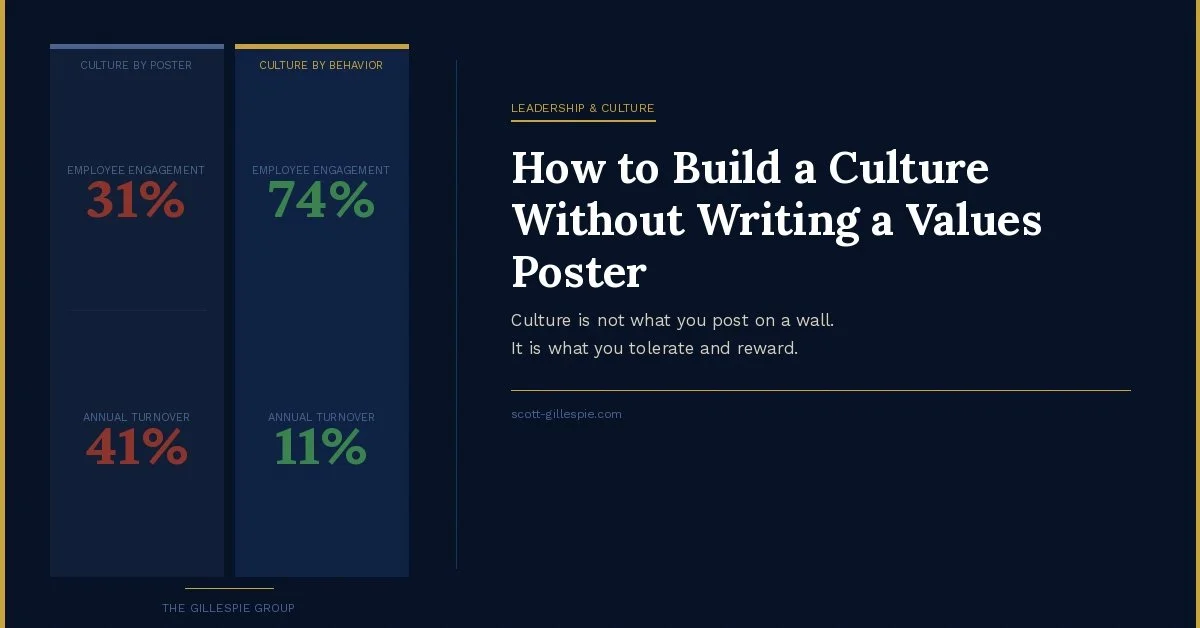
You likely have a set of words hanging on your office wall. Words like "Integrity," "Excellence," or "Teamwork" printed in a clean font over a stock photo of a mountain range. You spent a weekend retreat coming up with those words, and you felt a surge of pride when the framed posters arrived. But as you walk through your shop or sit in on a team meeting, you realize those words are invisible. Your best employees are frustrated by the lack of accountability, and your newest hires are picking up the lazy habits of the "C-players" you’ve allowed to linger. You realize that your values poster hasn't changed a single behavior. This is because culture is not a marketing slogan. Culture is the sum of what you reward, what you tolerate, and what you model when the pressure is on.
How to Scale a Service Business Without Cloning Yourself
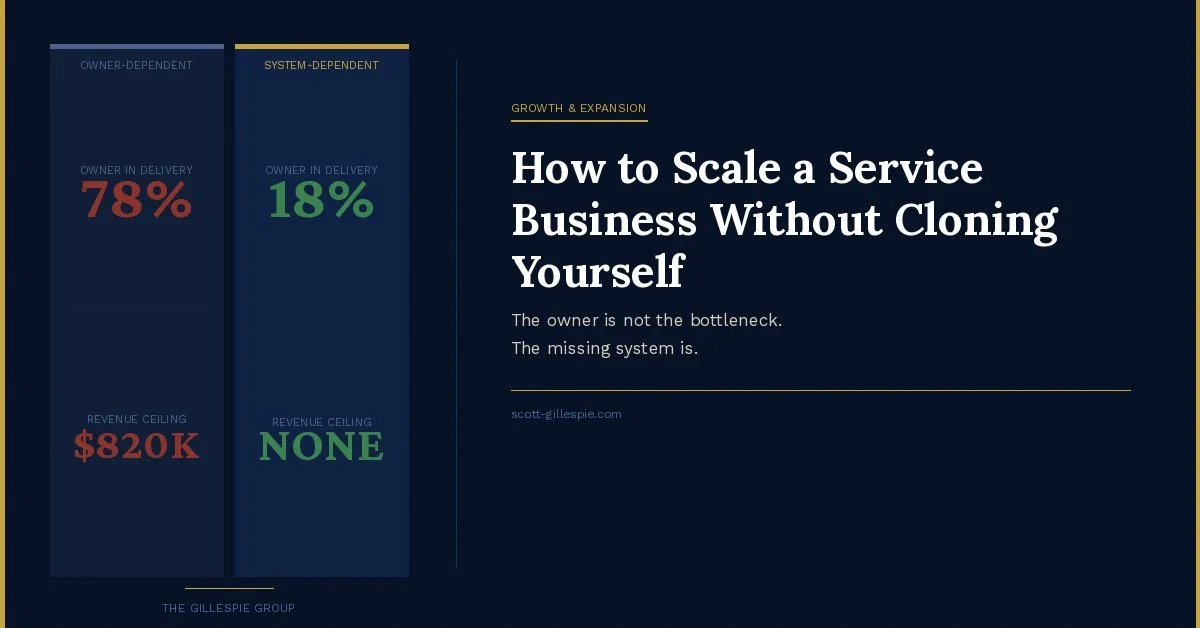
You wake up every morning wishing there were two of you. You believe that if you could just find someone with your exact work ethic, your specific technical "magic," and your intuitive understanding of the client, all your growth problems would vanish. You spend your weekends scrolling through job boards, searching for a unicorn technician or a mini-version of yourself to take the load off your shoulders. This pursuit of a "clone" is a romanticized delusion that keeps your service business stuck in the mud. You cannot scale a personality. You can only scale a process.
How to Build an Operations Manual Without Spending 100 Hours on It
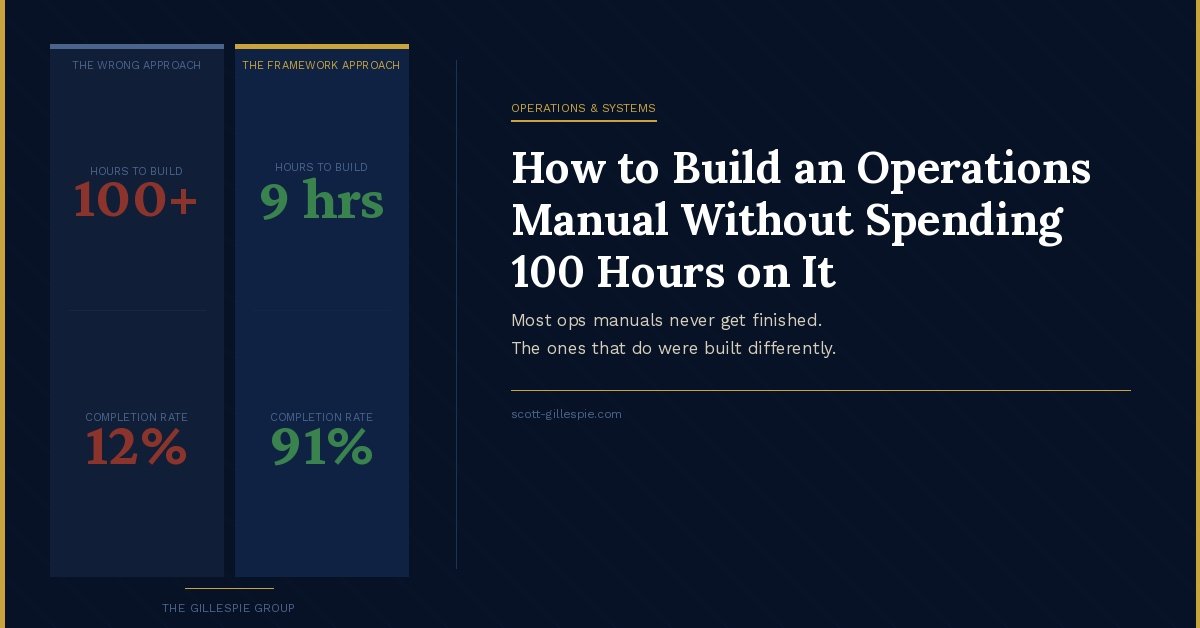
You are the most expensive person in your building, yet you spend half your day acting like a biological Google search engine for your staff. Every time an employee knocks on your door to ask how to handle a specific client complaint or where to find the login for a vendor portal, your growth stops. You built this business on your personal expertise, but that expertise has now become your prison. You know you need an operations manual. You know you need documented systems. But every time you look at that blank Word document, you imagine a six-month project that involves hundreds of hours of typing and formatting. You decide you don't have the time, so you go back to putting out fires. This delay is a choice to stay small.
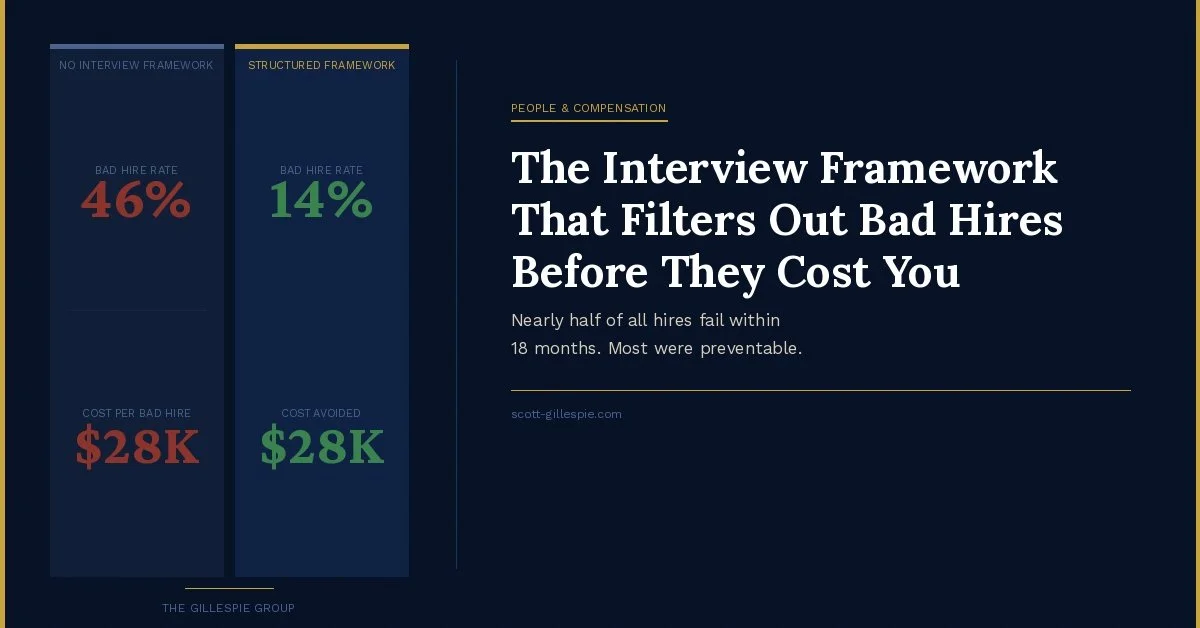
The Interview Framework That Filters Out Bad Hires Before They Cost You
You sit across from a candidate who looks perfect on paper. Their resume boasts the right certifications, their past titles suggest experience, and they possess a level of charisma that makes you want to grab a beer with them. You feel that familiar rush of relief because you are desperate to fill a seat. You hire them based on this "gut feeling," believing that your intuition is your greatest superpower. Three months later, you find yourself back in your office, staring at a mounting pile of client complaints and a toxic vibe that has infected your previously high-performing team. You realize that your intuition lied to you. The wrong hire doesn’t just cost you the salary you paid them; it costs you the momentum of your entire company.
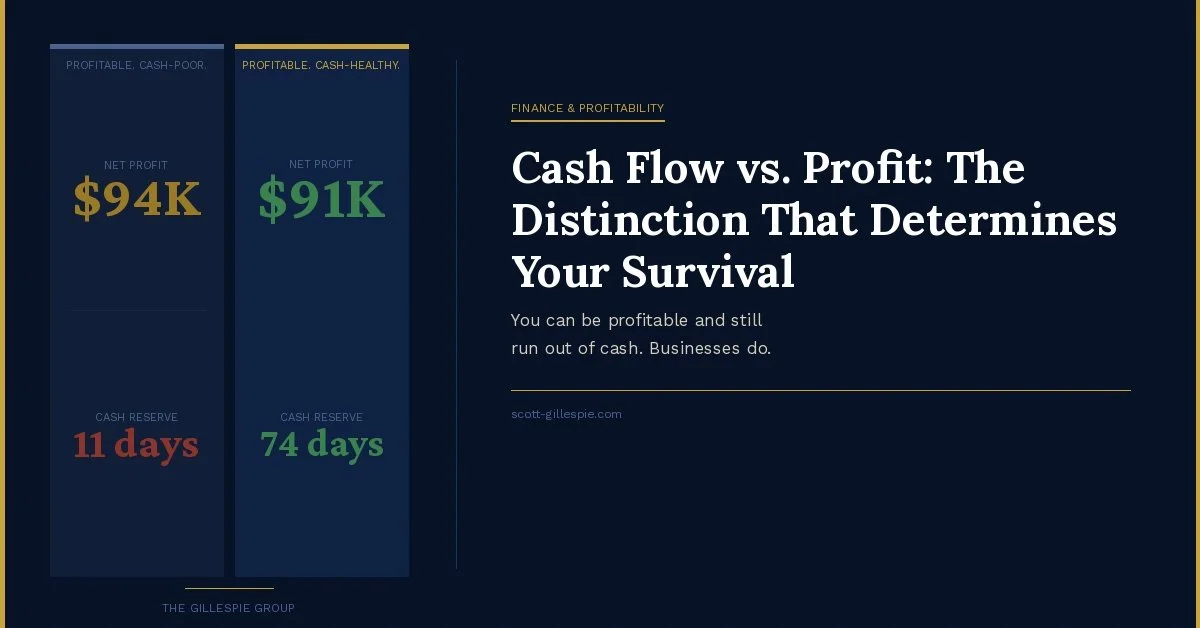
Cash Flow vs. Profit: The Distinction That Determines Your Survival
You stand at your desk, staring at a Profit and Loss statement that tells you you’ve had a banner month. The bottom line shines in a healthy shade of green. By every traditional accounting standard, you are successful. Yet, when you log into your online banking portal to verify the reality of that success, your stomach drops. The balance is lower than it was two weeks ago. You have a massive payroll tax payment due on Friday, a vendor threatening to cut off your supplies, and not enough in the operating account to cover both. You are living the most dangerous paradox in small business: you are profitable on paper, but you are going broke in real life.