Why Most Owners Underpay Stars and Overpay Underperformers
You sit in your office reviewing the upcoming payroll run. You look at the roster and see the name of your absolute best technician. This individual handles your most demanding clients, never complains about the schedule, and consistently delivers flawless execution. Then you look further down the spreadsheet and see the name of a mediocre employee who constantly shows up late, requires endless supervision, and routinely damages equipment. You realize, with a sudden sickening feeling, that the hourly pay gap between these two completely different individuals sits at a mere two dollars. You believe you treat everyone fairly. In reality, you actively insult your elite talent while heavily subsidizing total incompetence. You must fix the severe crisis of employee pay equity small business high performers face before your top producers walk out the door forever.
The Offer Letter Framework Every Owner Needs
You finally find the perfect candidate. You endure weeks of terrible interviews, sift through dozens of mediocre resumes, and battle the exhaustion of an empty schedule. When the right person sits across from your desk, you feel a massive wave of relief. You offer them the position immediately. You shake their hand, agree on an hourly wage, and send them a quick, casual email confirming their start date. You assume you just solved your capacity problem. You actually just created a massive operational liability. A casual job offer operates as a ticking time bomb inside your company.
Building a Benefits Package That Attracts Talent Without Overpaying
Every morning, you look at your team and wonder who will hand you a resignation letter next. You feel the constant pressure of large corporations looming over your local market. They offer shiny perks and gold-plated health insurance that seem absolutely impossible for your small operation to match. You assume your lack of a massive corporate budget makes you a sitting duck for aggressive talent poachers. This belief operates as a defensive lie. It prevents you from building a high-performance culture. You do not need a massive human resources department to win the war for talent. You need a benefits strategy that prizes relevance over raw spending.
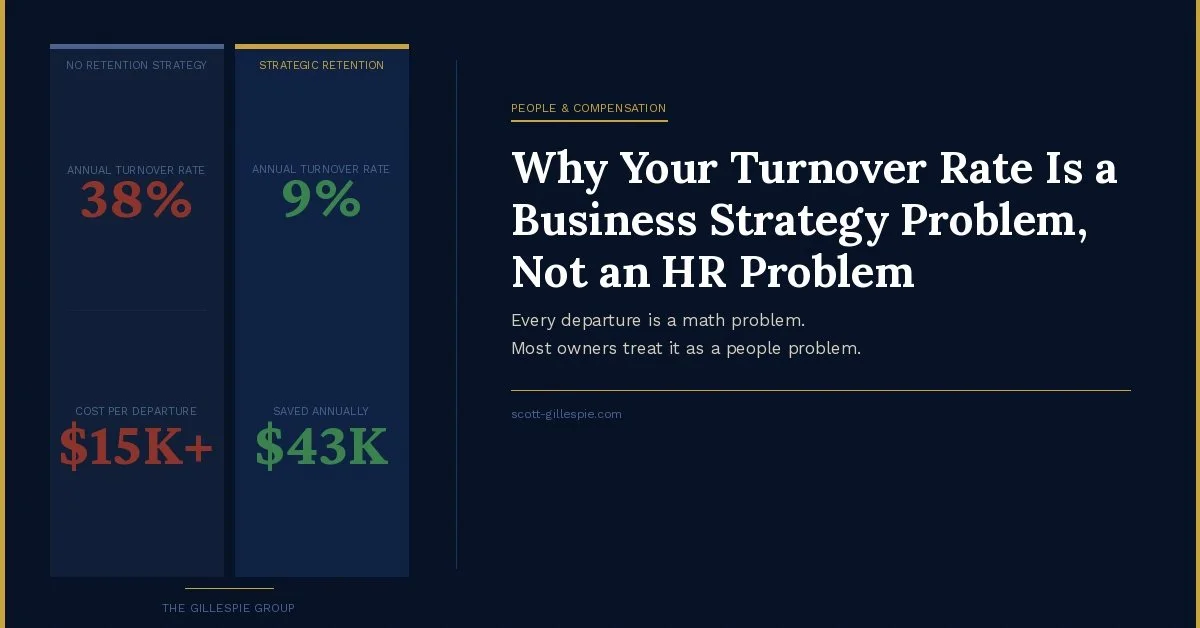
Why Your Turnover Rate Is a Business Strategy Problem, Not an HR Problem
You sit in your office, staring at the resignation email from your most reliable technician. They aren't leaving for a huge pay raise or a fancy title at a Silicon Valley startup. They are leaving to work for your direct competitor down the street for an extra two dollars an hour and a clearer schedule. Your first instinct involves frustration, followed quickly by an urge to call your office manager and demand they "fix" the hiring process. You view this departure as a human resources failure—a breakdown in recruiting or a lack of employee loyalty. This perspective is a comfortable lie that prevents you from seeing the truth. High employee turnover is rarely an HR problem; it is almost always a business strategy problem.
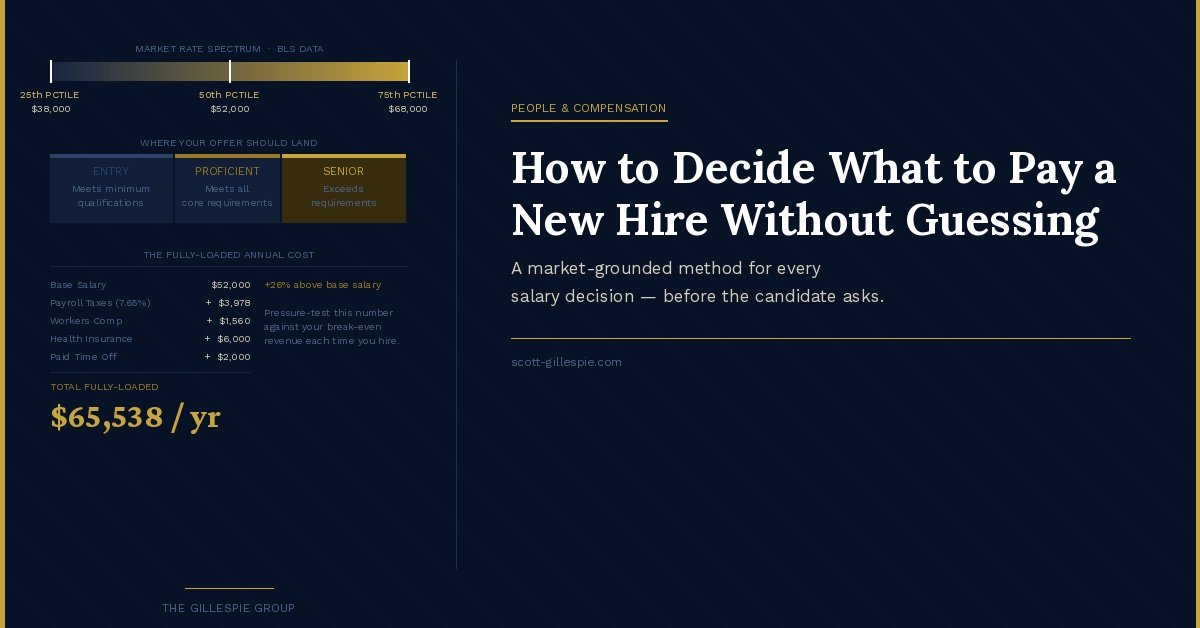
How to Decide What to Pay a New Hire Without Guessing
The candidate is sitting across from you. She's experienced, she interviewed well, and you want to hire her. Now she asks the question you've been half-dreading since the conversation started: "What does this role pay?"
Most service business owners answer this question one of two ways. Either they name a number they've carried in their head since they decided to hire — a number based on what they've paid before, what they heard a competitor was paying, or what the last person in the role accepted — or they throw the question back to the candidate and anchor to whatever she says. Neither approach is a strategy. Both are expensive.
Overpaying at hire compresses your margin immediately, sets a floor for every future compensation adjustment in the role, and creates internal equity problems the moment your existing team figures out what the new person earns. Underpaying gets you a candidate who accepts under duress and starts looking for another offer within six months — or a candidate who doesn't accept at all, leaving you to restart a hiring process that already costs you time and attention you don't have to spare.
The fix isn't complicated. It's a framework — a four-part method for arriving at a new hire salary that is grounded in market data, calibrated to your business's financial structure, and defensible in every direction.
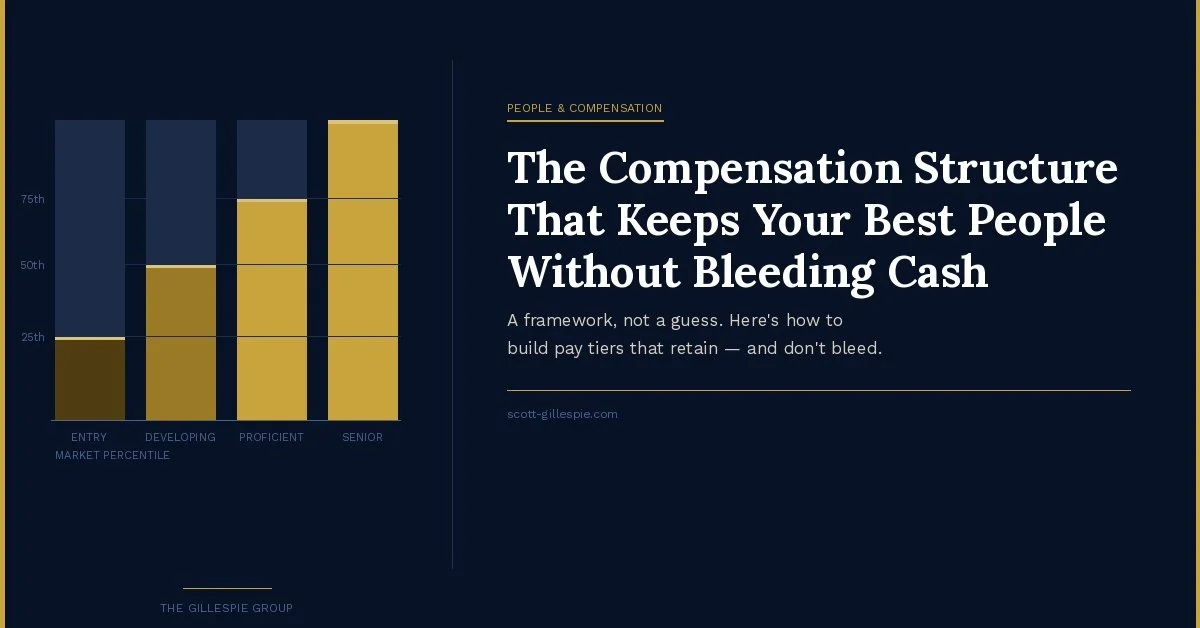
The Compensation Structure That Keeps Your Best People Without Bleeding Cash
Veronica ran a residential cleaning company with twelve employees. She had been in business for seven years and had never once lost a night of sleep over her team. Then, in a single quarter, three of her best people left. Not because she underpaid them. Not because the work dried up. Because they didn't know where they stood.
One of them told her on her way out the door: "I didn't know if staying made sense. Nobody ever told me what the path looked like."
Veronica had twelve employees and twelve separate compensation agreements — each one a product of a different negotiation, a different moment, a different level of urgency. None of them connected to each other. None of them told an employee anything about what came next. She had built a payroll. She had not built a system.
That distinction is what this post addresses. Your employee compensation structure — the architecture that defines how your small business pays people, how it advances them, and what they can expect — is either a retention tool or a departure accelerator. There is very little in between.