Gross Margin vs. Net Margin: Which One Actually Matters
You look at the final numbers for the month and feel a deep, sickening knot in your stomach. You generated more revenue than ever before. You dispatched trucks, pushed your team to the absolute physical limit, and collected massive checks. Yet the operating account looks completely drained. You wonder where all the money went. You blame the local economy. You blame your greedy vendors. You blame your technicians for working too slowly. You look everywhere except at the specific financial mechanics of your own operation. You must master the profound difference between the money you make on a job and the money you actually keep. Understanding the brutal math of gross margin vs net margin small business owners face every day represents the only path to true wealth.
The Real Cost of a Bad Hire — Run These Numbers
You stare at an empty desk or an idle service truck. The silence mocks you. You feel the crushing weight of unfulfilled client contracts and mounting pressure on your existing team. In a moment of sheer desperation, you review a mediocre resume. You interview a candidate who shows up ten minutes late and gives vague answers. You ignore the glaring red flags because you need a warm body to hold a wrench or answer a phone immediately. You hire them. Ninety days later, the experiment explodes. You fire them or they quit without notice. You look at your payroll software and calculate the three months of wages you lost. You feel frustrated, but you assume the financial damage stops there. You operate under a massive, dangerous delusion.
Why Most Owners Overpay in Taxes and the Framework to Fix It
You sit at your desk in the middle of April. You hold a pen over a checkbook, and your stomach drops. You write out a number that represents a massive portion of your life's work. You sign the check and hand it to the government. You feel a profound sense of resentment. You worked eighty hours a week all year. You navigated supply chain disasters, managed difficult employees, and dealt with demanding clients. You fought for every single dollar of revenue, only to watch a terrifying percentage of your cash vanish in a single afternoon. You view this payment as a non-negotiable penalty for your success. You accept it as a fixed cost of doing business.
Five Financial Ratios Every Small Business Owner Should Track
You log into your banking portal every single morning. You stare at the balance on the screen. If the number looks large, you relax. You might even authorize a new equipment purchase. If the number looks small, your chest tightens. You immediately email your sales team and demand more revenue. You operate your entire company based on the amount of cash currently sitting in checking.
How to Build a Business That Runs Without the Owner Running It
You check your bank account every morning. If the balance looks high, you feel successful. If the balance looks low, you panic and demand your team push for more sales. This habit represents a fatal strategic error. Your bank account acts as a lagging indicator. It tells you what happened in the past, but it provides absolutely zero context for the future of your company. Operating a business based on the daily cash balance keeps you trapped in a cycle of constant anxiety. You cannot run a scalable, ten-million-dollar enterprise by guessing.
The Pricing Mistake That Is Quietly Killing Your Margins
You slide the proposal across the desk. The prospect stares at the number. They frown. They ask for a slight reduction to get the deal signed today. You feel the pressure of an empty schedule next week. You cave. You strike ten percent off the total and shake their hand. You walk to your truck feeling like a master negotiator. You secured the revenue. You kept your technicians busy. But this emotional victory hides a brutal financial reality. You did not win a negotiation. You just bought a job. This specific mistake quietly kills your margins and suffocates your business.
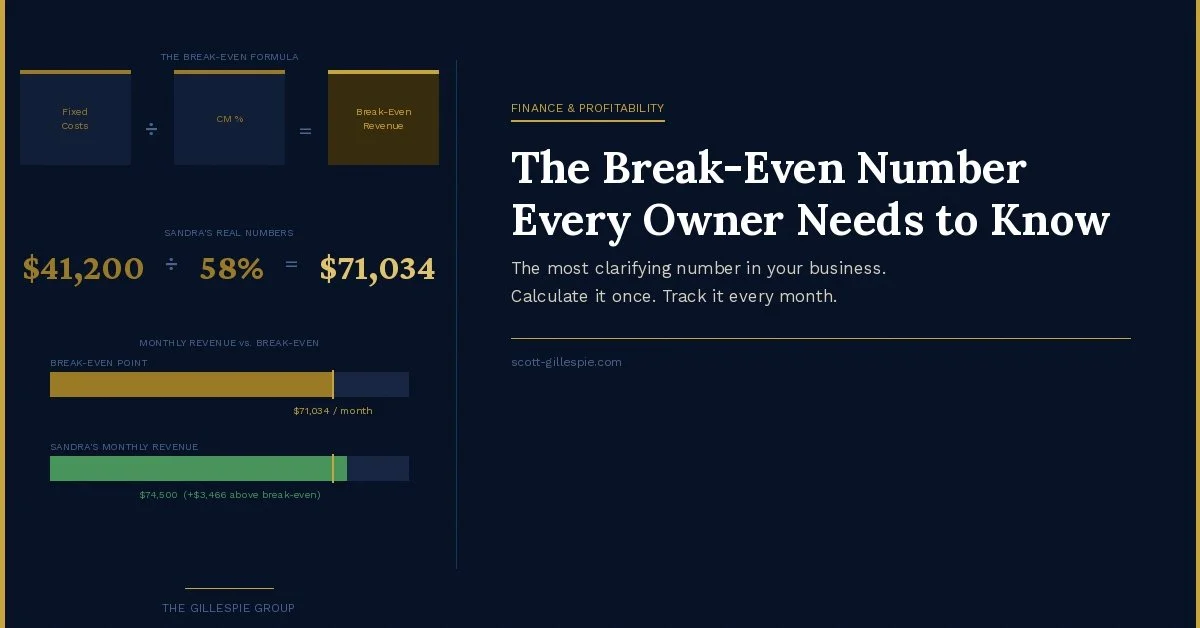
The Break-Even Number Every Owner Needs to Know
Sandra ran a residential electrical contracting business outside Nashville. Six employees, two vans, and a calendar that stayed full enough to feel comfortable. She raised her rates in January, picked up two new accounts in March, and hit her highest-revenue quarter ever in the spring.
She was also, somehow, tighter on cash than she'd ever been.
Revenue had climbed. Her bank account told a different story. She wasn't sure whether to be encouraged by the top line or worried by the bottom. And she had no way to answer the one question that would have oriented everything: at what point in the month does this business actually start making money?
That question has a precise answer. It's called your break-even point, and it's the most clarifying number a service business owner can know cold — not because it tells you how to grow, but because it tells you whether what you're doing right now is working, and exactly how much margin for error you actually have.

The Business Valuation Basics Every Owner Should Understand Before They Need Them
Paul built a commercial pest control company in central Florida over fourteen years. He had $2.1 million in revenue, a reliable team of twelve technicians, and a contract base that renewed at about 88% every year. He was good at the business and knew it. When a regional competitor approached him about an acquisition, he named a number he felt was fair — based on a rough sense of what the revenue was worth and what he needed to walk away comfortable.
The buyer's number was 40% lower.
Not because Paul's business wasn't valuable. Because Paul hadn't spent any time understanding what drives a business's value — which factors increase it, which factors compress it, and how a sophisticated buyer prices each one. The deal fell apart. Paul walked away from that table without knowing whether he had left money behind or dodged a lowball offer. He had no framework for judging either.
Most small business owners learn how business valuation works the week they decide they want to sell — or the week someone else decides they want to buy. That timing is exactly wrong. The owners who achieve the best exit outcomes understand valuation long before the conversation starts, because they spend the years before exit actively improving the variables that drive it. Here's the foundation.