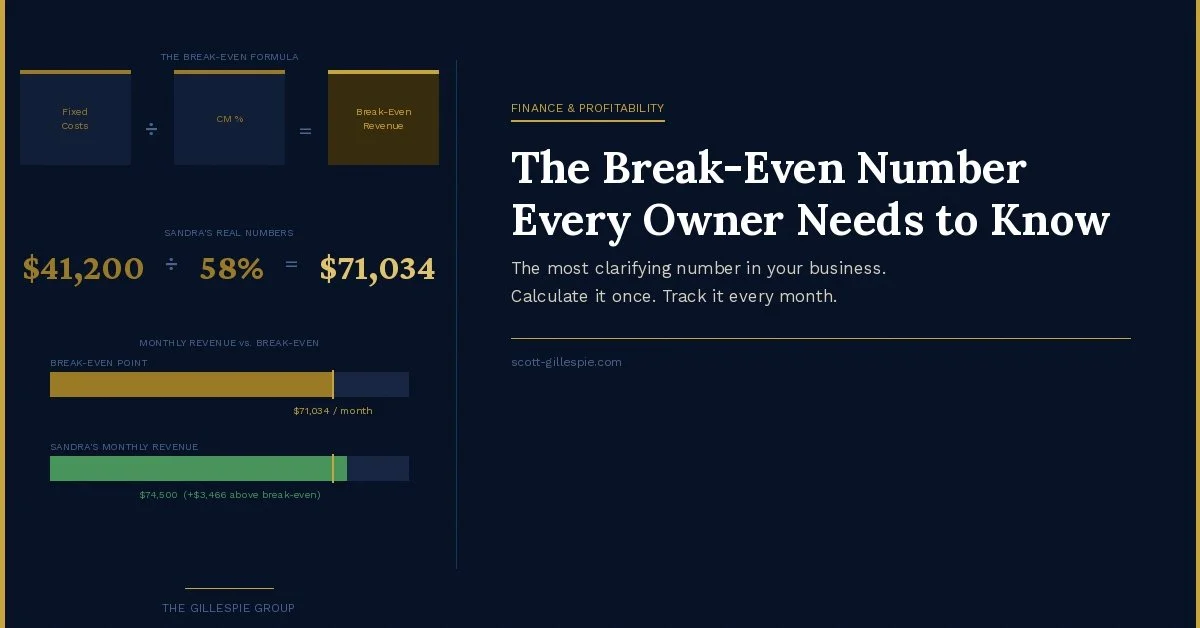
The Break-Even Number Every Owner Needs to Know
Sandra ran a residential electrical contracting business outside Nashville. Six employees, two vans, and a calendar that stayed full enough to feel comfortable. She raised her rates in January, picked up two new accounts in March, and hit her highest-revenue quarter ever in the spring.
She was also, somehow, tighter on cash than she'd ever been.
Revenue had climbed. Her bank account told a different story. She wasn't sure whether to be encouraged by the top line or worried by the bottom. And she had no way to answer the one question that would have oriented everything: at what point in the month does this business actually start making money?
That question has a precise answer. It's called your break-even point, and it's the most clarifying number a service business owner can know cold — not because it tells you how to grow, but because it tells you whether what you're doing right now is working, and exactly how much margin for error you actually have.

The Business Valuation Basics Every Owner Should Understand Before They Need Them
Paul built a commercial pest control company in central Florida over fourteen years. He had $2.1 million in revenue, a reliable team of twelve technicians, and a contract base that renewed at about 88% every year. He was good at the business and knew it. When a regional competitor approached him about an acquisition, he named a number he felt was fair — based on a rough sense of what the revenue was worth and what he needed to walk away comfortable.
The buyer's number was 40% lower.
Not because Paul's business wasn't valuable. Because Paul hadn't spent any time understanding what drives a business's value — which factors increase it, which factors compress it, and how a sophisticated buyer prices each one. The deal fell apart. Paul walked away from that table without knowing whether he had left money behind or dodged a lowball offer. He had no framework for judging either.
Most small business owners learn how business valuation works the week they decide they want to sell — or the week someone else decides they want to buy. That timing is exactly wrong. The owners who achieve the best exit outcomes understand valuation long before the conversation starts, because they spend the years before exit actively improving the variables that drive it. Here's the foundation.
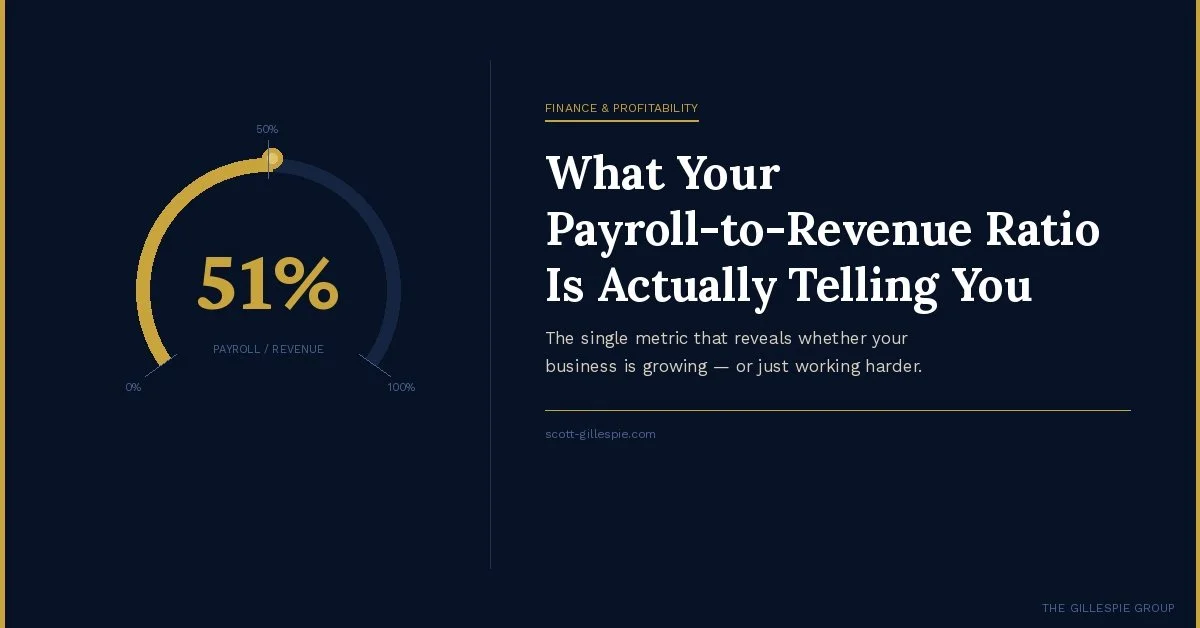
What Your Payroll-to-Revenue Ratio Is Actually Telling You
Marcus ran a commercial cleaning company out of Atlanta. Nine years in business, seven employees, three vans, and about forty commercial accounts. Revenue had climbed from $380,000 to just over $820,000 in four years. From the outside — and from where Marcus stood — the business looked healthy.
Then someone asked him what his payroll-to-revenue ratio was.
He didn't know. Not because he was inattentive. He ran payroll every two weeks and tracked the totals. But he had never calculated the ratio — never looked at what his labor investment represented as a percentage of the revenue it was supposed to generate. He was watching the dollar amount. He had stopped reading what the dollar amount meant.
When he finally ran the number, it was 51%.
That single figure explained everything: the months when revenue looked fine but cash felt strained, the raises that seemed affordable at the time but never improved the margin, the persistent feeling that the business worked harder than it grew. The payroll-to-revenue ratio had been sending a signal for years. Nobody had told Marcus it was worth reading.
Your business is sending the same signal right now. Here's how to read it.