Gross Margin vs. Net Margin: Which One Actually Matters
You look at the final numbers for the month and feel a deep, sickening knot in your stomach. You generated more revenue than ever before. You dispatched trucks, pushed your team to the absolute physical limit, and collected massive checks. Yet the operating account looks completely drained. You wonder where all the money went. You blame the local economy. You blame your greedy vendors. You blame your technicians for working too slowly. You look everywhere except at the specific financial mechanics of your own operation. You must master the profound difference between the money you make on a job and the money you actually keep. Understanding the brutal math of gross margin vs net margin small business owners face every day represents the only path to true wealth.
The Hidden Cost of Every Discount You Give
You sit across the desk from a hesitant prospect. The deal hangs in the balance. The client reviews your proposal, leans back in their chair, and asks for a small price reduction to sign the contract today. You feel the anxiety rise in your chest. You need this revenue to keep your technicians busy next week. You want to close the file and move on to the next fire burning in your office. You cave. You strike ten percent off the total and shake their hand. You walk to your truck feeling like a master negotiator. You secured the revenue. You kept the engine running.
The Hidden Cost of Every Discount You Give
You sit across the table from a prospect. The deal hangs in the balance. The client reviews your proposal, leans back in their chair, and pushes back on the price. You feel the anxiety rise in your chest. You need this revenue to keep your technicians busy next week. You want to close the file and move on to the next fire burning in your office. You cave. You offer a ten percent discount to get the contract signed immediately. You shake hands and walk away feeling like a savvy dealmaker. You secured the work. You kept the engine running.

Cash Flow vs. Profit: The Distinction That Determines Your Survival
You stand at your desk, staring at a Profit and Loss statement that tells you you’ve had a banner month. The bottom line shines in a healthy shade of green. By every traditional accounting standard, you are successful. Yet, when you log into your online banking portal to verify the reality of that success, your stomach drops. The balance is lower than it was two weeks ago. You have a massive payroll tax payment due on Friday, a vendor threatening to cut off your supplies, and not enough in the operating account to cover both. You are living the most dangerous paradox in small business: you are profitable on paper, but you are going broke in real life.
What Your Payroll-to-Revenue Ratio Is Actually Telling You
Marcus ran a commercial cleaning company out of Atlanta. Nine years in business, seven employees, three vans, and about forty commercial accounts. Revenue had climbed from $380,000 to just over $820,000 in four years. From the outside — and from where Marcus stood — the business looked healthy.
Then someone asked him what his payroll-to-revenue ratio was.
He didn't know. Not because he was inattentive. He ran payroll every two weeks and tracked the totals. But he had never calculated the ratio — never looked at what his labor investment represented as a percentage of the revenue it was supposed to generate. He was watching the dollar amount. He had stopped reading what the dollar amount meant.
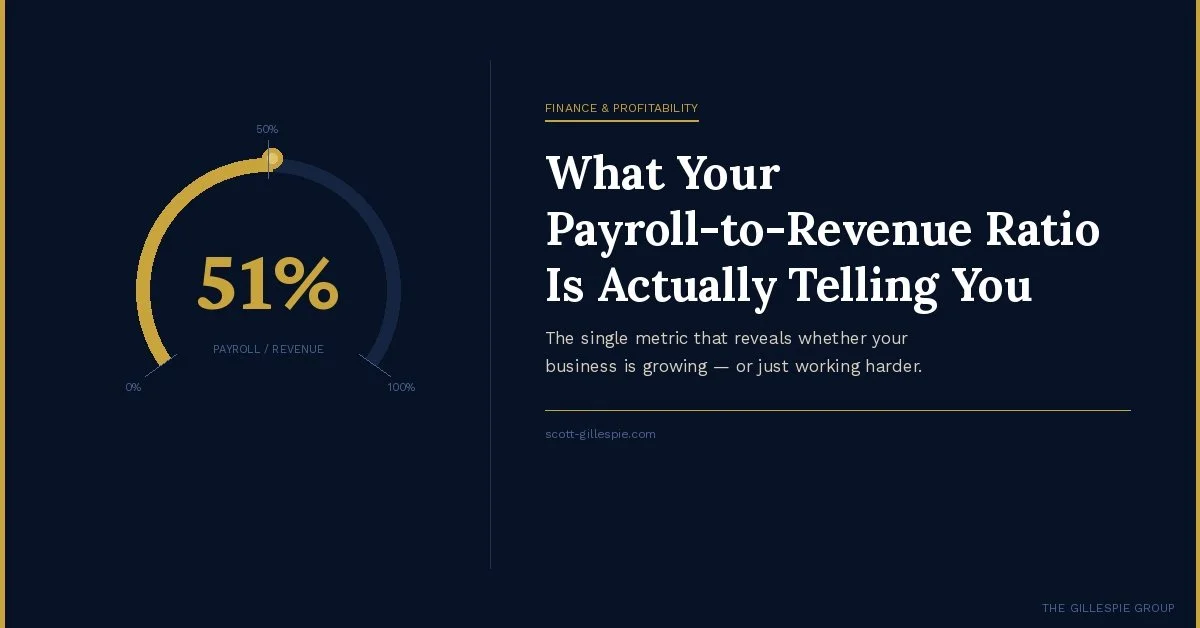
When he finally ran the number, it was 51%.
That single figure explained everything: the months when revenue looked fine but cash felt strained, the raises that seemed affordable at the time but never improved the margin, the persistent feeling that the business worked harder than it grew. The payroll-to-revenue ratio had been sending a signal for years. Nobody had told Marcus it was worth reading.
Your business is sending the same signal right now. Here's how to read it.