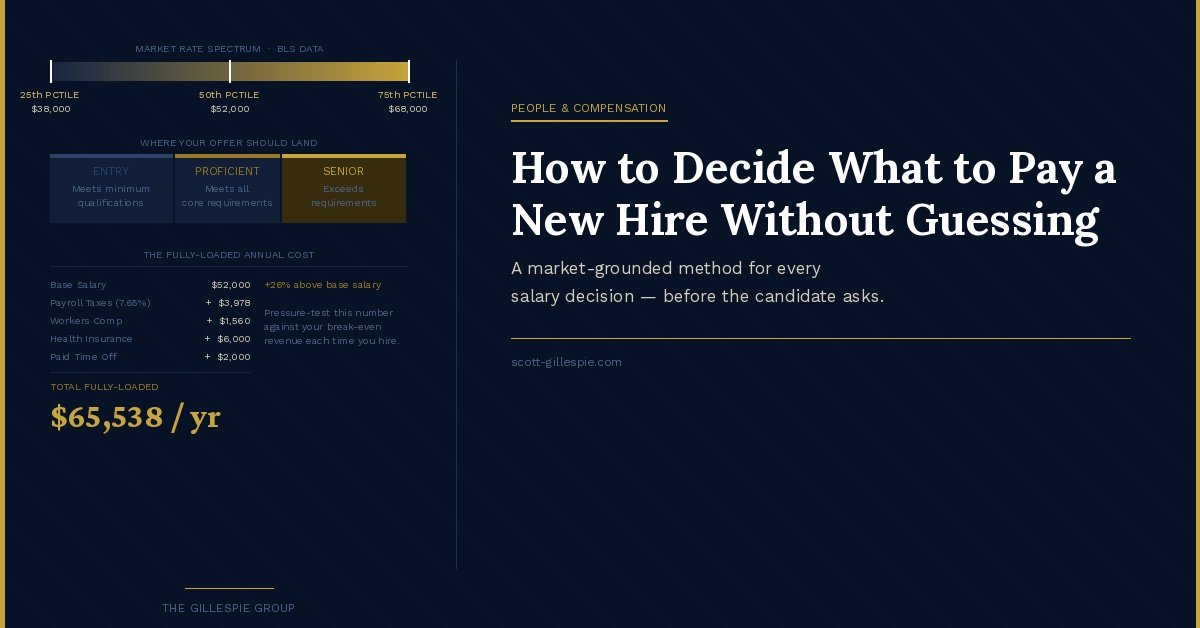
How to Decide What to Pay a New Hire Without Guessing
The candidate is sitting across from you. She's experienced, she interviewed well, and you want to hire her. Now she asks the question you've been half-dreading since the conversation started: "What does this role pay?"
Most service business owners answer this question one of two ways. Either they name a number they've carried in their head since they decided to hire — a number based on what they've paid before, what they heard a competitor was paying, or what the last person in the role accepted — or they throw the question back to the candidate and anchor to whatever she says. Neither approach is a strategy. Both are expensive.
Overpaying at hire compresses your margin immediately, sets a floor for every future compensation adjustment in the role, and creates internal equity problems the moment your existing team figures out what the new person earns. Underpaying gets you a candidate who accepts under duress and starts looking for another offer within six months — or a candidate who doesn't accept at all, leaving you to restart a hiring process that already costs you time and attention you don't have to spare.
The fix isn't complicated. It's a framework — a four-part method for arriving at a new hire salary that is grounded in market data, calibrated to your business's financial structure, and defensible in every direction.