Five Financial Ratios Every Small Business Owner Should Track
You log into your banking portal every single morning. You stare at the balance on the screen. If the number looks large, you relax. You might even authorize a new equipment purchase. If the number looks small, your chest tightens. You immediately email your sales team and demand more revenue. You operate your entire company based on the amount of cash currently sitting in checking.
How to Build a Business That Runs Without the Owner Running It
You check your bank account every morning. If the balance looks high, you feel successful. If the balance looks low, you panic and demand your team push for more sales. This habit represents a fatal strategic error. Your bank account acts as a lagging indicator. It tells you what happened in the past, but it provides absolutely zero context for the future of your company. Operating a business based on the daily cash balance keeps you trapped in a cycle of constant anxiety. You cannot run a scalable, ten-million-dollar enterprise by guessing.
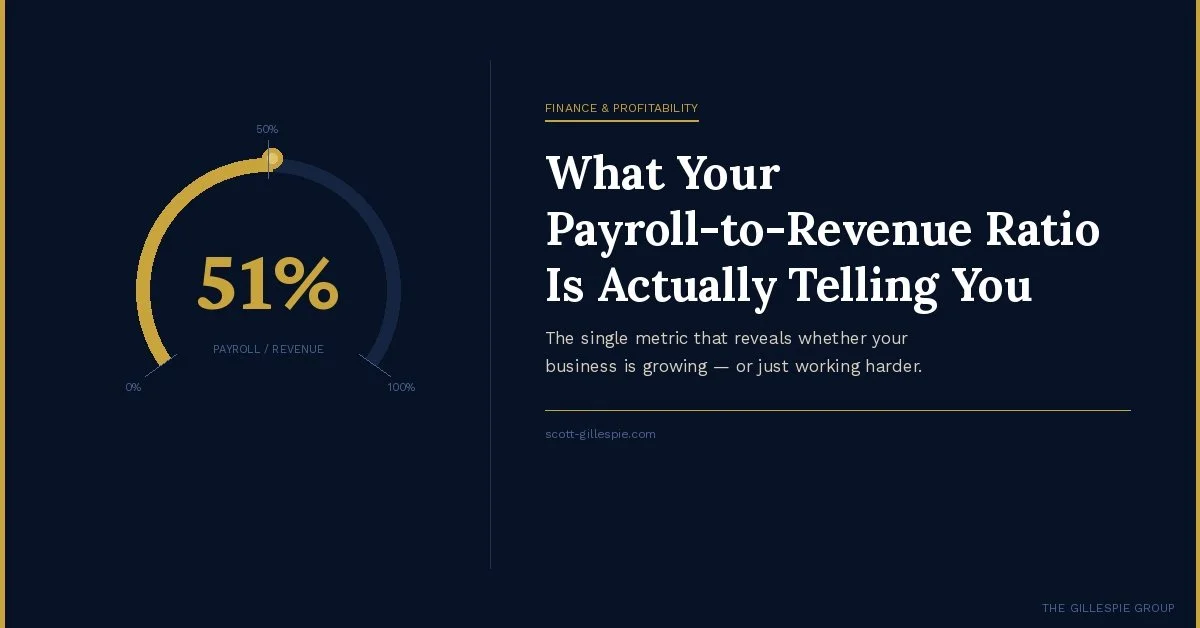
What Your Payroll-to-Revenue Ratio Is Actually Telling You
Marcus ran a commercial cleaning company out of Atlanta. Nine years in business, seven employees, three vans, and about forty commercial accounts. Revenue had climbed from $380,000 to just over $820,000 in four years. From the outside — and from where Marcus stood — the business looked healthy.
Then someone asked him what his payroll-to-revenue ratio was.
He didn't know. Not because he was inattentive. He ran payroll every two weeks and tracked the totals. But he had never calculated the ratio — never looked at what his labor investment represented as a percentage of the revenue it was supposed to generate. He was watching the dollar amount. He had stopped reading what the dollar amount meant.
When he finally ran the number, it was 51%.
That single figure explained everything: the months when revenue looked fine but cash felt strained, the raises that seemed affordable at the time but never improved the margin, the persistent feeling that the business worked harder than it grew. The payroll-to-revenue ratio had been sending a signal for years. Nobody had told Marcus it was worth reading.
Your business is sending the same signal right now. Here's how to read it.