How to Conduct a Business Exit Readiness Assessment and Build an Acquirable Asset
You have likely heard stories about small business owners receiving unexpected phone calls from private equity groups offering life-changing sums of cash for their companies. That narrative is a dangerous myth that blinds operators to commercial reality. Unsolicited offers almost never lead to closed transactions on favorable terms. When an acquirer reaches out unexpectedly, they are looking for a bargain, a distressed asset, or a founder who does not know what their enterprise is worth. If you sit back and wait for a buyer to rescue you from daily operational fatigue, you abandon your single largest wealth creation opportunity.
How to Reduce Owner Dependency and Build a Business That Reliably Runs Without You
You built this company from a laptop and a single mobile phone. In the beginning, your personal intervention was the only thing standing between victory and total operational collapse. You answered every phone call at dawn. You closed every difficult sale. You personally fixed every customer complaint at two in the morning. That relentless effort was required to survive stage one of your venture. The problem is that you never stopped doing it. You built a high-paying job for yourself disguised as a scalable enterprise, and now you are trapped inside the very engine you designed. Every single morning, you wake up to an inbox overflowing with micro-decisions, crisis escalations, and tactical approvals. You wear the badge of being the hardest worker in the room like a medal of honor. Stop wearing it. It is not an honor. It is a structural failure.
Why Key Person Risk Is the Biggest Value Destroyer in Small Business Sales
A founder builds a company through sheer force of will. The enterprise relies entirely on that singular energy to survive the early years. The market rewards this intense dedication with climbing revenue and local respect. Success, however, creates a dangerous, invisible trap. When an organization requires a specific individual to function, that organization possesses a fatal flaw. This structural weakness acts as a massive anchor on the ultimate valuation of the company. A business demanding a specific person's presence to generate cash holds almost zero transferable value in the open market.
Key person risk destroys wealth faster than any economic downturn. It occurs when the operational logic, the client relationships, or the technical expertise lives exclusively inside the brain of one human being. This individual might be the founder, a charismatic sales director, or a veteran field supervisor. Regardless of the title, their indispensability represents a terrifying liability. The company operates perpetually one medical emergency, one sudden resignation, or one retirement away from total collapse. Removing this profound vulnerability stands as the most critical mandate for any leadership team attempting to engineer a permanent financial asset.
What Clean Books Are Worth at Exit — More Than You Think
You treat your bookkeeping as a necessary evil. You hand a chaotic shoebox of receipts or a messy digital file to your accountant in February and pray you do not owe the government too much money. You run personal vacations, family cell phone plans, and random meals through the business account because you feel you earned the right to do so. You view your financial statements purely as an annoying compliance headache rather than a massive strategic asset. This specific, lazy mindset actively destroys the ultimate value of your life's work.
When you finally decide to walk away from your company, you will discover a brutal reality at the negotiating table. You must recognize the massive impact clean books business value at exit small business operations command when the due diligence begins. A buyer does not pay a premium for your hard work or your emotional attachment to the brand. They pay a premium for absolute financial certainty. If your numbers lack integrity, your entire valuation collapses.
The EBITDA Framework: The Number That Drives Most Business Valuations
You pour your blood, sweat, and emotional energy into your service business every single day. You check the bank account in the morning and feel a sudden surge of pride when the cash balance looks healthy. You boast about top-line revenue at local networking events and assume your growing sales figures prove your ultimate success. But when a sophisticated acquirer looks at your company, they completely ignore the vanity of your top line. They strip away your ego and search ruthlessly for one specific, clinical metric. They look for your EBITDA. If you lack a firm grasp of the EBITDA calculation small business valuation framework, you operate completely blind to the actual market value of your life's work.
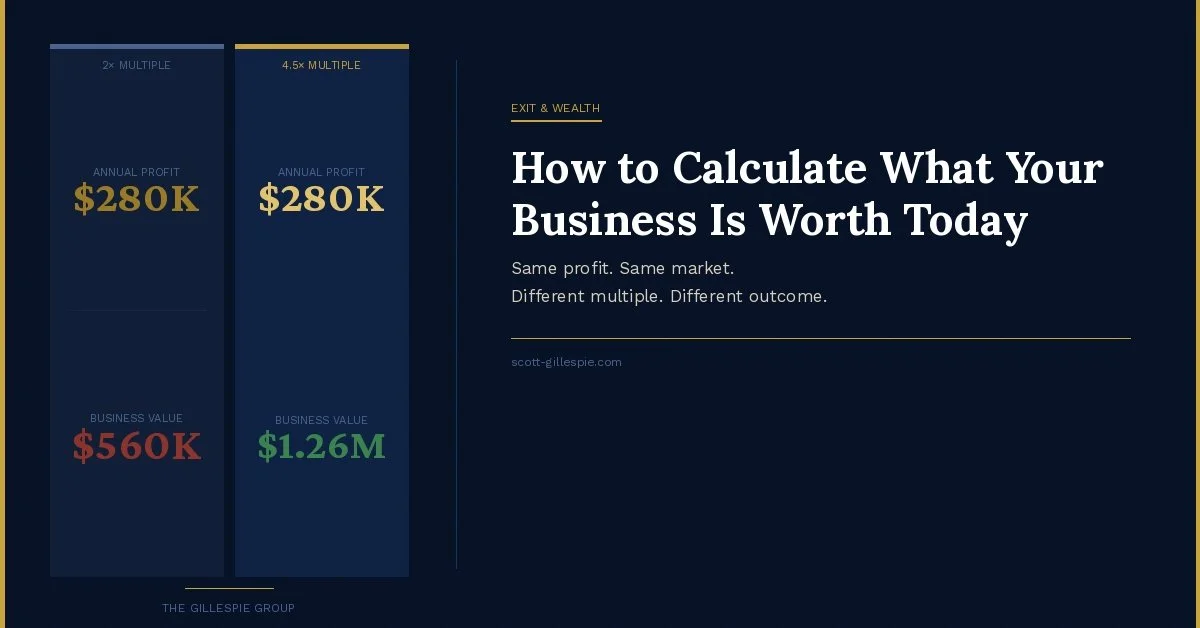
How to Calculate What Your Business Is Worth Today
You currently treat your business like a black box. You know how much is in the checking account, you know what your revenue was last month, and you have a vague "gut feeling" that the whole thing is worth a few million dollars. You tell yourself that you’ll figure out the actual value when you’re ready to retire in ten years. This lack of clarity is a strategic mistake that limits your current decision-making. If you don't know your business's value, you cannot effectively allocate capital, you cannot negotiate with investors, and you certainly cannot perform a proper exit readiness assessment. To calculate business value small business owner today, you must move past emotional sweat equity and embrace the cold math of the market.