 Image 1 of 1
Free Resources: The Owner's Payroll Problem White Label Worksheets
$0.00
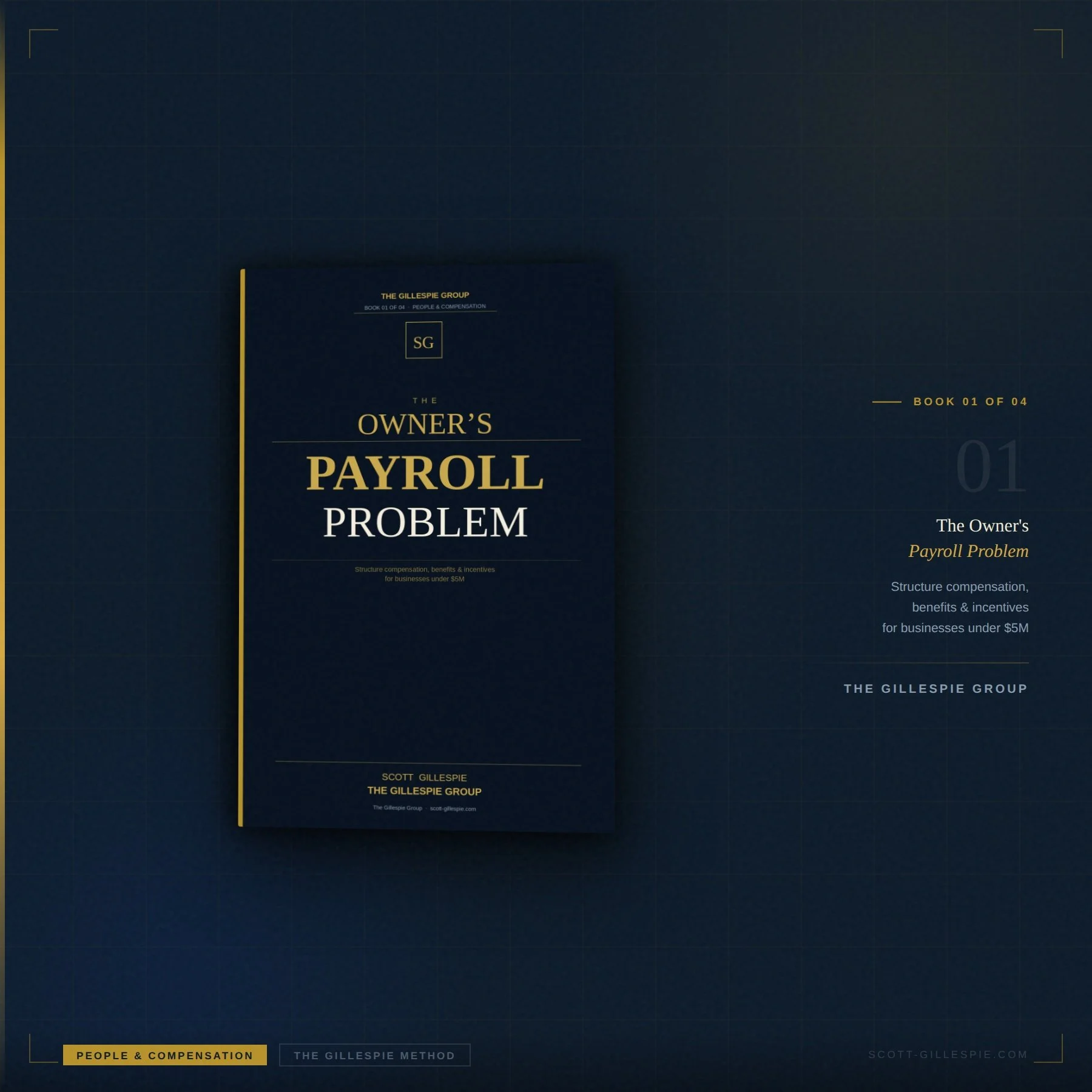
Most business books end with a framework you understand and a notebook page of good intentions. This isn't that.
Every tool in this kit connects directly to a chapter in The Owner's Payroll Problem. Each one is a working document — not a summary, not a reference sheet. You fill it in, you hand it to your team, you put it in front of the decision it was built to govern. The framework stops being something you read and starts being something you use.
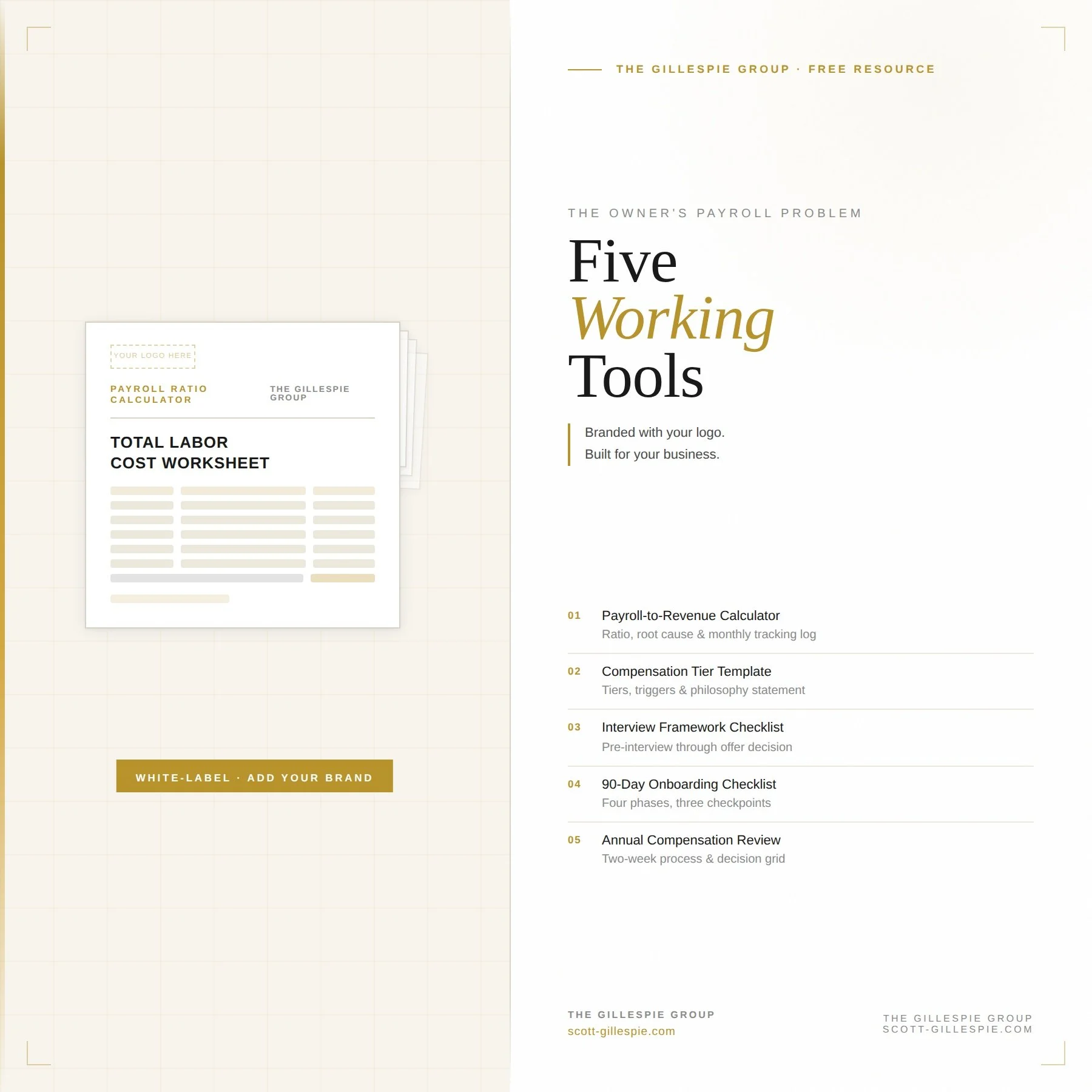
All five documents are white-label. Add your logo, your company name, your colors. They become your tools — documents that carry your brand, live in your business, and work for your team the same way they worked when you built them.
Payroll-to-Revenue Ratio Calculator
The single most important number in compensation management — calculated correctly, for the first time. This isn't a formula on a napkin. It's a five-part working document: a full labor cost build-up table that accounts for wages, employer taxes, benefits, workers' comp, PTO, and every other cost most owners forget to count. The ratio formula, applied to your actual numbers. An interpretation guide that tells you exactly what your ratio means and what to do about it. A root cause diagnostic that identifies whether you're looking at a staffing problem, a market-rate problem, or a revenue problem. And a 13-month tracking log — because the ratio you calculate today is only valuable if you check it again next month.
Compensation Tier and Trigger Template
This is the document that replaces twelve individual compensation agreements with one coherent architecture. Complete it once for each distinct role in your business. It captures the tier ranges, the observable criteria that determine who belongs at each level, the specific advancement triggers that move someone from one tier to the next, and the compensation philosophy statement that explains to your team — in plain language — how pay decisions get made. When an employee asks why they're paid what they're paid, this document is the answer. When someone asks what advancement looks like, this document is the path.
Interview Framework Checklist
A four-stage hiring process, checkboxes included. Pre-interview preparation through offer decision — every step documented so the discipline holds even when the pressure to fill the seat is highest. The checklist includes the pre-hire ratio test, the behavioral question bank setup, the reference check framework with the five specific questions that reveal what resumes hide, and the internal equity check before any offer goes out. Archive it in the employee file after the hire. If a performance issue surfaces later, the documented hiring process is evidence that the business made a reasonable, structured decision.
90-Day Onboarding Checklist
Four phases, one document. Pre-start preparation through the 90-day formal review — with an employee information block at the top that puts the checkpoint conversation dates on the calendar before the employee's first day. The checklist captures what needs to happen before Day One, what the first 30 days build toward, how the integration phase shifts the relationship from supervised to independent, and what the 90-day review needs to produce — confirmed tier placement, documented development priorities, and a clear statement of what advancement looks like from here.
Annual Compensation Review Process
The half-day process that replaces reactive raises. A two-week workflow: Week One is preparation — benchmark refreshes, performance record pulls, the review decision grid with one row per employee, and the ratio test on all proposed adjustments before a single conversation happens. Week Two is the conversations — structured, specific, with the compensation decision delivered clearly and documented in writing. The tool includes a five-decision reference table that defines exactly when a merit increase, tier advancement, market adjustment, or development plan is the right call. And the review grid itself — 11 employee rows, pre-formatted, ready to complete before annual conversations begin.
Most business books end with a framework you understand and a notebook page of good intentions. This isn't that.
Every tool in this kit connects directly to a chapter in The Owner's Payroll Problem. Each one is a working document — not a summary, not a reference sheet. You fill it in, you hand it to your team, you put it in front of the decision it was built to govern. The framework stops being something you read and starts being something you use.
All five documents are white-label. Add your logo, your company name, your colors. They become your tools — documents that carry your brand, live in your business, and work for your team the same way they worked when you built them.
Payroll-to-Revenue Ratio Calculator
The single most important number in compensation management — calculated correctly, for the first time. This isn't a formula on a napkin. It's a five-part working document: a full labor cost build-up table that accounts for wages, employer taxes, benefits, workers' comp, PTO, and every other cost most owners forget to count. The ratio formula, applied to your actual numbers. An interpretation guide that tells you exactly what your ratio means and what to do about it. A root cause diagnostic that identifies whether you're looking at a staffing problem, a market-rate problem, or a revenue problem. And a 13-month tracking log — because the ratio you calculate today is only valuable if you check it again next month.
Compensation Tier and Trigger Template
This is the document that replaces twelve individual compensation agreements with one coherent architecture. Complete it once for each distinct role in your business. It captures the tier ranges, the observable criteria that determine who belongs at each level, the specific advancement triggers that move someone from one tier to the next, and the compensation philosophy statement that explains to your team — in plain language — how pay decisions get made. When an employee asks why they're paid what they're paid, this document is the answer. When someone asks what advancement looks like, this document is the path.
Interview Framework Checklist
A four-stage hiring process, checkboxes included. Pre-interview preparation through offer decision — every step documented so the discipline holds even when the pressure to fill the seat is highest. The checklist includes the pre-hire ratio test, the behavioral question bank setup, the reference check framework with the five specific questions that reveal what resumes hide, and the internal equity check before any offer goes out. Archive it in the employee file after the hire. If a performance issue surfaces later, the documented hiring process is evidence that the business made a reasonable, structured decision.
90-Day Onboarding Checklist
Four phases, one document. Pre-start preparation through the 90-day formal review — with an employee information block at the top that puts the checkpoint conversation dates on the calendar before the employee's first day. The checklist captures what needs to happen before Day One, what the first 30 days build toward, how the integration phase shifts the relationship from supervised to independent, and what the 90-day review needs to produce — confirmed tier placement, documented development priorities, and a clear statement of what advancement looks like from here.
Annual Compensation Review Process
The half-day process that replaces reactive raises. A two-week workflow: Week One is preparation — benchmark refreshes, performance record pulls, the review decision grid with one row per employee, and the ratio test on all proposed adjustments before a single conversation happens. Week Two is the conversations — structured, specific, with the compensation decision delivered clearly and documented in writing. The tool includes a five-decision reference table that defines exactly when a merit increase, tier advancement, market adjustment, or development plan is the right call. And the review grid itself — 11 employee rows, pre-formatted, ready to complete before annual conversations begin.