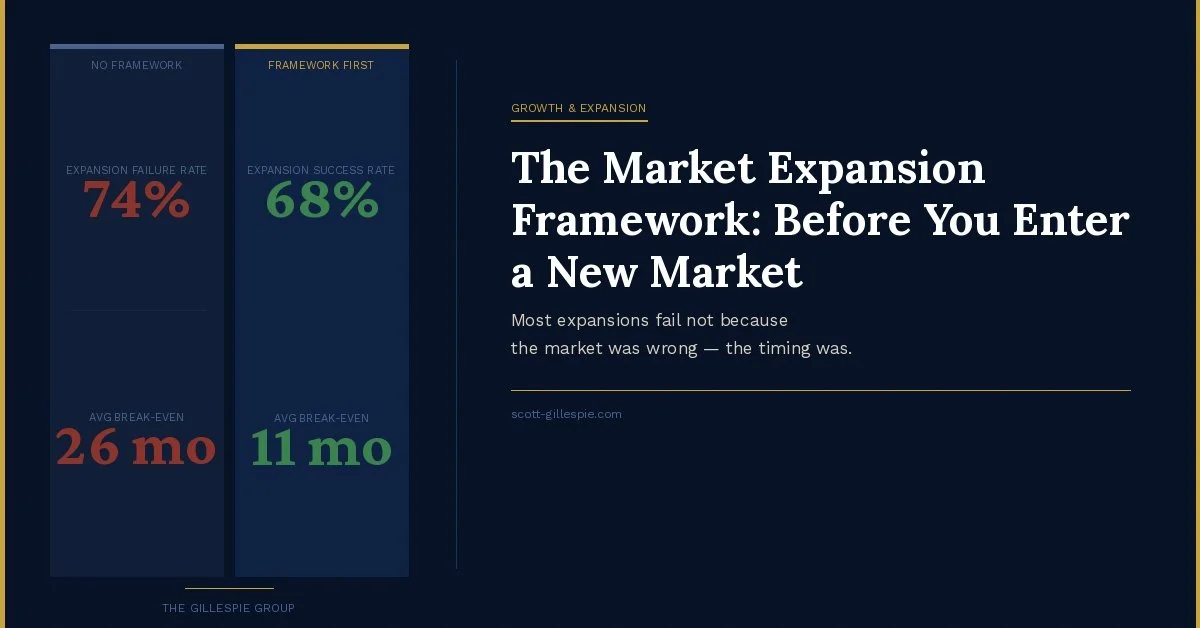
The Market Expansion Framework: Before You Enter a New Market
You stand at the edge of your current territory, looking at the map of the neighboring county or a new service vertical, and you see nothing but opportunity. Your current market feels crowded, or perhaps you have simply conquered it. You believe that "going big" in a new area is the logical next step to finally break through your revenue ceiling. You envision a second location, a new fleet of trucks, or a new suite of digital services that will double your size in eighteen months. This ambition is the engine of entrepreneurship, but without a rigorous framework, it is also the fastest way to set your current success on fire. Entering a new market is not just a growth play; it is a high-stakes capital allocation decision that demands more than a "gut feeling."
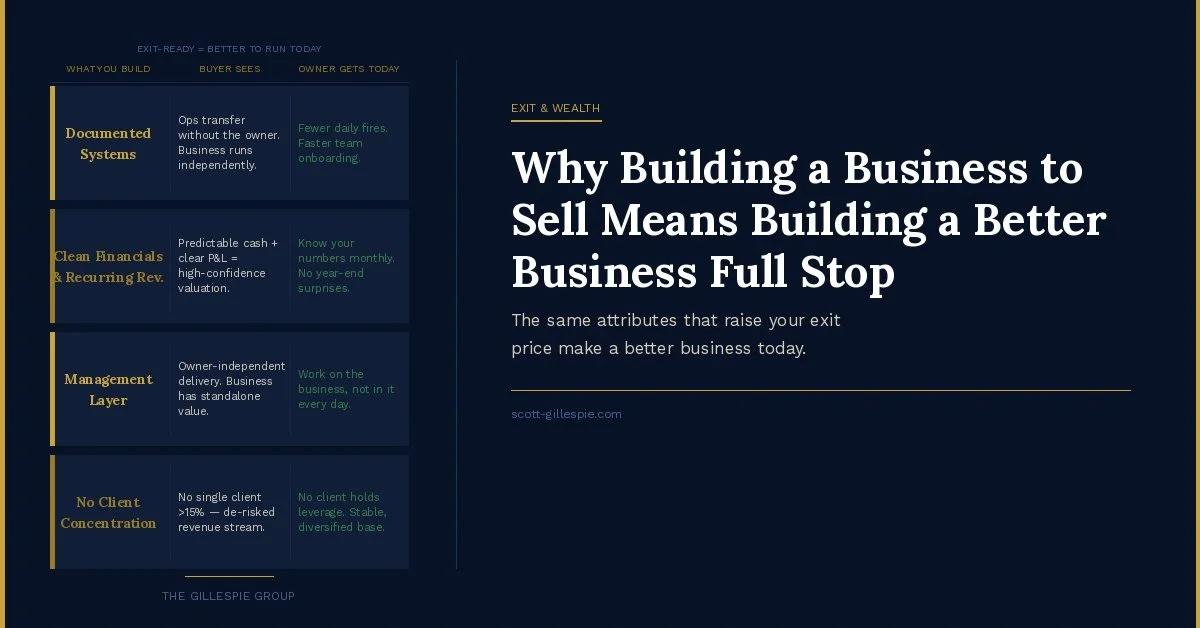
Why Building a Business to Sell Means Building a Better Business Full Stop
You likely tell yourself that you aren’t interested in selling. You built this company from the ground up, and you plan to run it until the day you decide to retire. You view "exit planning" as something for the future—a distant event that doesn't require your attention today. This perspective is a strategic mistake that limits your current revenue and tethers you to a business that cannot function without your constant input. The truth is simple: the disciplines required to make a business attractive to a buyer are the exact same disciplines that make a business profitable and peaceful for the owner to keep. When you build a business to sell, you inadvertently build a better business, full stop.
The most valuable asset in any service-based company isn't the equipment, the office lease, or even the client list. It is the ability of the business to produce a predictable result without the owner’s physical presence. Most small businesses under $10 million in revenue suffer from extreme owner-dependency. You are the lead salesperson, the chief problem solver, and the final word on every technical detail. While this makes you feel important, it makes the business worthless to an outsider. A buyer isn't looking to purchase a job; they are looking to purchase a cash-flow machine. If the machine breaks the moment you walk away, the machine has no value.