The Player-Coach Trap: Why Stepping onto the Field Destroys Your Enterprise Value
You wake up at five in the morning, check your phone, and immediately spot three client emergencies that require your direct intervention. By eight o'clock, you are on the phone reassuring a key client because your lead account manager dropped the ball. By noon, you are writing technical proposals, jumping into production, or personally fixing a service delivery mistake that should have been handled two management layers below you. You tell yourself this is what leadership looks like. You convince yourself that staying close to the work guarantees quality, preserves client relationships, and protects your margin. That self-delusion is actively destroying the valuation of your company.
Five Financial Ratios Every Small Business Owner Should Track
You log into your banking portal every single morning. You stare at the balance on the screen. If the number looks large, you relax. You might even authorize a new equipment purchase. If the number looks small, your chest tightens. You immediately email your sales team and demand more revenue. You operate your entire company based on the amount of cash currently sitting in checking.
How to Build a Business That Runs Without the Owner Running It
You check your bank account every morning. If the balance looks high, you feel successful. If the balance looks low, you panic and demand your team push for more sales. This habit represents a fatal strategic error. Your bank account acts as a lagging indicator. It tells you what happened in the past, but it provides absolutely zero context for the future of your company. Operating a business based on the daily cash balance keeps you trapped in a cycle of constant anxiety. You cannot run a scalable, ten-million-dollar enterprise by guessing.
The Technology Audit: What Tools Are You Paying for That No One Uses
You sign up for another software subscription. You watch the slick promotional video and convince yourself this new dashboard will finally organize your chaotic dispatch schedule. You plug in the company credit card. Six months later, you look at your bank statement. You realize your team still uses group text messages and physical whiteboards to manage the day. That shiny new software sits completely abandoned. You currently pay a monthly premium for a digital graveyard. This software bloat quietly drains your margins and complicates your entire operation.
How to Automate the Repetitive Decisions Eating Your Week
Your phone buzzes again. Another employee stands in your doorway asking a familiar question. They want to know if they can approve a small client refund. They want to know which supplier to call for a rush part. You answer them immediately. You feel a brief surge of pride because you know exactly how to handle the situation. You possess the answers. But this dynamic quietly destroys your company. You mistake availability for leadership. You confuse constant communication with operational efficiency. You act as a human search engine for your staff. Every repetitive decision you make steals precious cognitive energy from the strategic growth of your enterprise.
The Expense Approval System That Removes the Owner From Every Purchase
You act as the most expensive administrative assistant in your company. Every time a technician needs a new drill bit or the office manager wants to buy a ream of paper, they have to find you, explain the need, and wait for your verbal approval. You believe this keeps you in control of your cash flow. You tell yourself that you are protecting the margins and preventing waste. In reality, you are strangling your growth. You have turned yourself into the ultimate bottleneck. If you have to approve every twenty-dollar purchase, you are telegraphing that you do not trust your team or your own systems. This lack of trust represents a conscious choice to stay small.
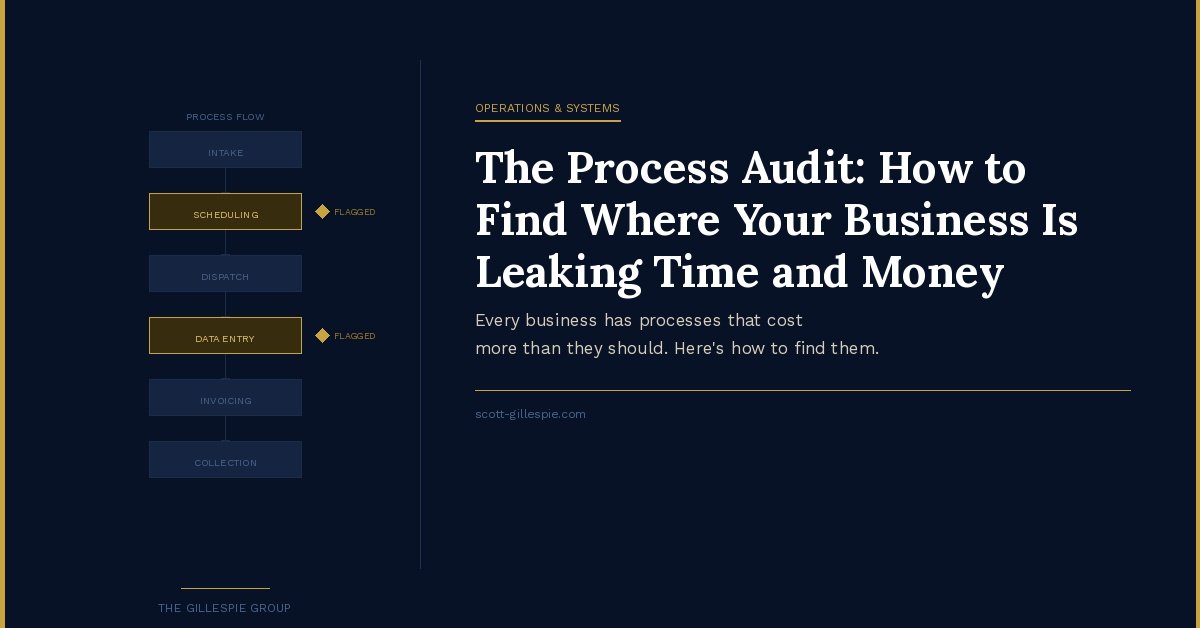
The Process Audit: How to Find Where Your Business Is Leaking Time and Money
Derek ran a seven-person HVAC service company outside Charlotte. Busy every single week — six technicians, a full dispatch calendar, and a reputation that kept the phone ringing. He worked 55 hours most weeks. His team worked hard. Revenue hovered around $1.1 million for three consecutive years without moving.
He wasn't losing customers. He wasn't underpriced. His team wasn't disengaged. The business just seemed to absorb every hour he poured into it and produce the same result. Busier than ever. Exactly the same size.
When someone finally asked Derek to walk through how a job moved from phone call to completed invoice, he described seven handoffs, three separate spreadsheets, two apps that didn't talk to each other, and a step where his office manager re-entered the same customer information into two different systems every single time. He had never counted the steps. He had just lived inside them for so long that they felt like the business — not friction the business happened to be carrying.
That friction had a cost. He just hadn't looked at it yet.
A process audit is the act of looking. It doesn't require a consultant or a technology investment or a weekend retreat. It requires a deliberate walk through every operational sequence in your business — asking at each step: does this create value, or does it simply consume time and money that could go somewhere else?