Why Key Person Risk Is the Biggest Value Destroyer in Small Business Sales
A founder builds a company through sheer force of will. The enterprise relies entirely on that singular energy to survive the early years. The market rewards this intense dedication with climbing revenue and local respect. Success, however, creates a dangerous, invisible trap. When an organization requires a specific individual to function, that organization possesses a fatal flaw. This structural weakness acts as a massive anchor on the ultimate valuation of the company. A business demanding a specific person's presence to generate cash holds almost zero transferable value in the open market.
Key person risk destroys wealth faster than any economic downturn. It occurs when the operational logic, the client relationships, or the technical expertise lives exclusively inside the brain of one human being. This individual might be the founder, a charismatic sales director, or a veteran field supervisor. Regardless of the title, their indispensability represents a terrifying liability. The company operates perpetually one medical emergency, one sudden resignation, or one retirement away from total collapse. Removing this profound vulnerability stands as the most critical mandate for any leadership team attempting to engineer a permanent financial asset.
The Customer Concentration Problem That Will Kill Your Sale
You remember the exact day you landed your largest account. You sat across the table from a commercial prospect, negotiated the terms, and secured a contract that doubled your monthly revenue. You drove back to your office feeling victorious. You celebrated with your staff. That single signature changed the trajectory of your income statement. You assumed this victory proved your success as an entrepreneur. You operated under a delusion.
Landing a disproportionately large client feels like a victory on the top line, but it creates a fatal vulnerability on your balance sheet. When a single customer controls twenty percent or more of your total income, you stop owning an independent business. You become an outsourced employee for another corporation. This dynamic creates customer concentration. If you intend to harvest the wealth you built by eventually selling your enterprise, you must confront this liability. You must dilute the concentration risk before it dictates your future.
The EBITDA Framework: The Number That Drives Most Business Valuations
You pour your blood, sweat, and emotional energy into your service business every single day. You check the bank account in the morning and feel a sudden surge of pride when the cash balance looks healthy. You boast about top-line revenue at local networking events and assume your growing sales figures prove your ultimate success. But when a sophisticated acquirer looks at your company, they completely ignore the vanity of your top line. They strip away your ego and search ruthlessly for one specific, clinical metric. They look for your EBITDA. If you lack a firm grasp of the EBITDA calculation small business valuation framework, you operate completely blind to the actual market value of your life's work.
The Three Types of Business Buyers and What Each Values Most
You pour your absolute lifeblood into your enterprise. You sacrifice your evenings, endure massive financial stress, and navigate endless operational disasters to build a company that generates real revenue. Eventually, the timeline shifts. You decide you want to step away. You assume that putting your business on the market resembles selling a house. You clean up the financials, apply a fresh coat of metaphorical paint, and wait for the highest bidder to arrive. You believe that every potential acquirer looks at your profit and loss statement and sees the exact same value.
Why Owner-Dependent Businesses Sell for Less and What to Do About It
You answer every emergency call. You sign every check. You close the biggest deals. You take pride in this relentless hustle. You believe your personal grit built this company from nothing, and you are entirely correct. But that exact same grit now actively destroys your future wealth. When you become the undisputed center of your business, you create a fatal operational flaw. You make the company completely unsellable. A buyer will not pay a premium for a high-stress job. They pay a premium for a wealth-generating machine. If your machine requires your constant physical presence to operate, the market will penalize you with a massive owner-dependency discount.
The Exit Readiness Assessment: How Close Is Your Business to Market-Ready?
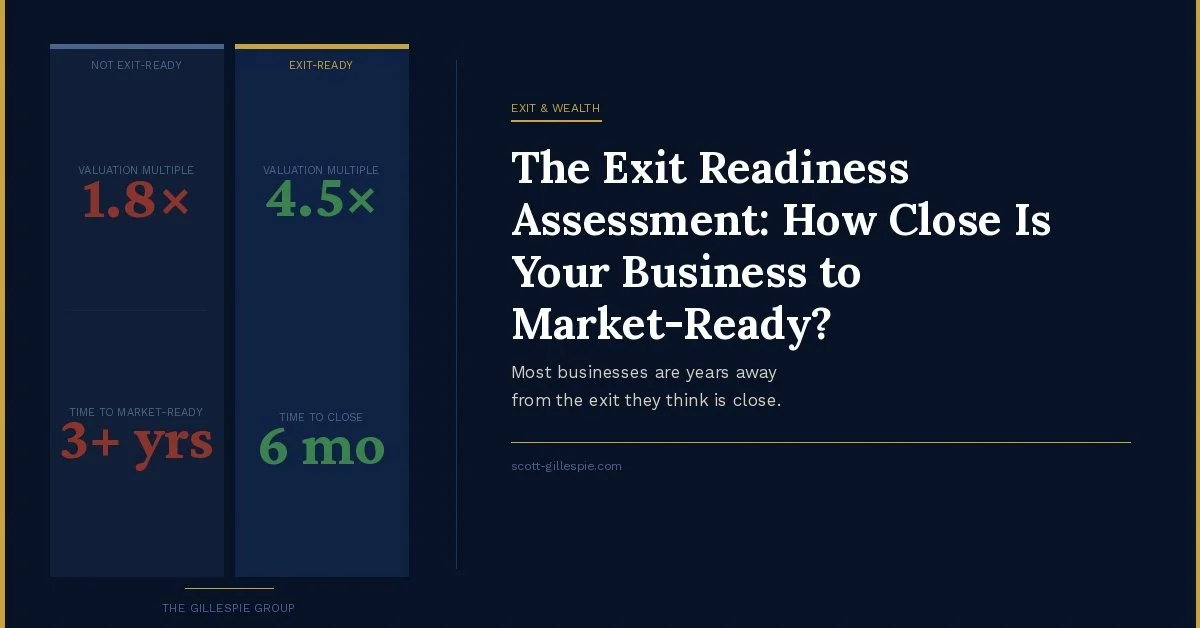
You currently possess a number in your head that represents the value of your life’s work. You arrived at this figure by looking at your top-line revenue, glancing at your bank balance, and adding a healthy dose of emotional sweat equity. You believe that when the time comes to walk away, a buyer will see the same value you see. This assumption is the most dangerous financial gamble you can make. The market does not care about your history, your late nights, or your personal attachment to the brand. The market only cares about risk. Most small businesses under $10 million in revenue fail to sell not because they lack revenue, but because they lack readiness. You might feel ready to leave, but your business is likely unready to be owned by someone else.