The Three Types of Business Buyers and What Each Values Most
You pour your absolute lifeblood into your enterprise. You sacrifice your evenings, endure massive financial stress, and navigate endless operational disasters to build a company that generates real revenue. Eventually, the timeline shifts. You decide you want to step away. You assume that putting your business on the market resembles selling a house. You clean up the financials, apply a fresh coat of metaphorical paint, and wait for the highest bidder to arrive. You believe that every potential acquirer looks at your profit and loss statement and sees the exact same value.
When Acquisition Makes More Sense Than Organic Growth
You stare at your whiteboard every single morning. Your sales numbers inch upward month after month, but the progress feels agonizingly slow. You grind out every new client contract through sheer force of will. You spend thousands of dollars on digital marketing campaigns that yield mediocre, unpredictable results. You interview endless candidates trying to find one decent technician to put in an empty service truck. The slow crawl of this traditional growth path exhausts you. You feel like you push a massive boulder up a steep hill every single day. You assume this grueling effort represents the only valid way to build a ten-million-dollar company. This assumption blinds you to a massive strategic shortcut. Sometimes the absolute fastest way to acquire market share involves buying the competitor struggling right across town.
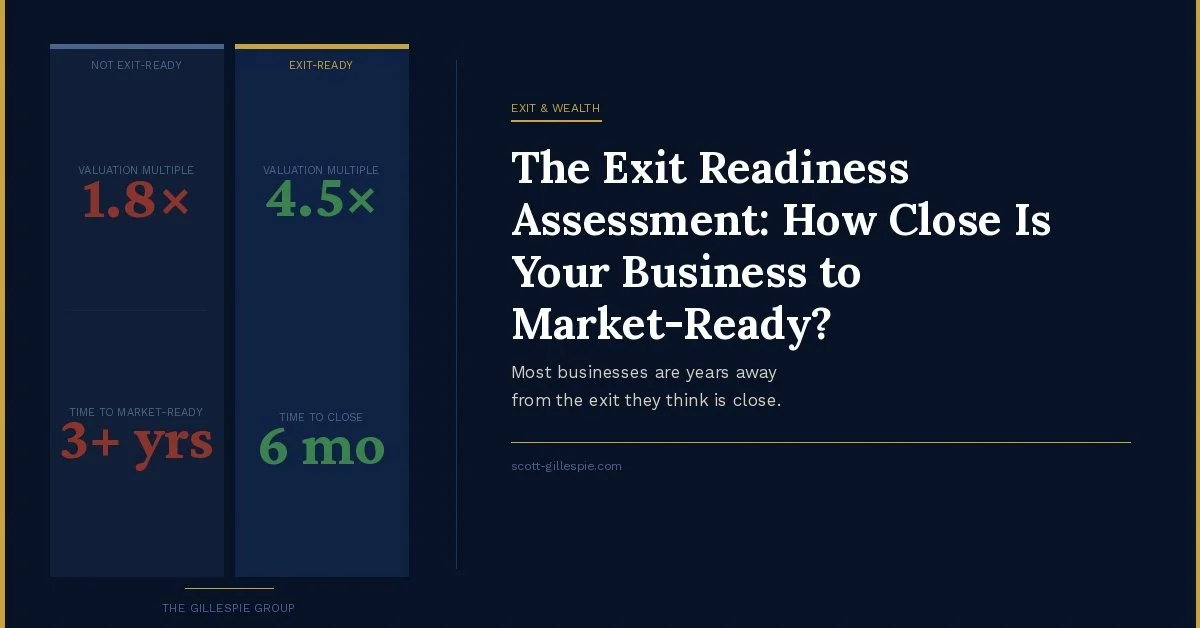
The Exit Readiness Assessment: How Close Is Your Business to Market-Ready?
You currently possess a number in your head that represents the value of your life’s work. You arrived at this figure by looking at your top-line revenue, glancing at your bank balance, and adding a healthy dose of emotional sweat equity. You believe that when the time comes to walk away, a buyer will see the same value you see. This assumption is the most dangerous financial gamble you can make. The market does not care about your history, your late nights, or your personal attachment to the brand. The market only cares about risk. Most small businesses under $10 million in revenue fail to sell not because they lack revenue, but because they lack readiness. You might feel ready to leave, but your business is likely unready to be owned by someone else.